
Restoring Ọṣọọsì
Long before it was a domain, this name traveled through scripts. Ọṣọọsì begins in Yoruba (modern Latin orthography), passes through scholarly transliteration, and ends — for now — inside the punycode machinery of the global DNS. Each stage of that journey preserves some information and loses some, and the craft of restoration is knowing exactly which marks matter. This post follows the name stage by stage: the original script, the reconstructed pronunciation, the mythological record, the material evidence, and finally the Unicode form that carries all of it into the address bar. Think of it as a biography of a name, told through its spelling.
At a Glance
- Restored name: Ọṣọọsì
- ASCII form: ochosi
- Meaning: "The hunter — orisha of the hunt, the forest, and deliberate strategy (standard Yoruba Ọ̀ṣọ́ọ̀sì; Cuban Ochosi, Brazilian Oxóssi)"
- Domain of influence: Hunting, Forest, Justice
- Pantheon: Yoruba
- Classification: Tier 1
- Original script: Ọ̀ṣọ́ọ̀sì (Yoruba (modern Latin orthography))
- Live domain: ọṣọọsì.com
Overview
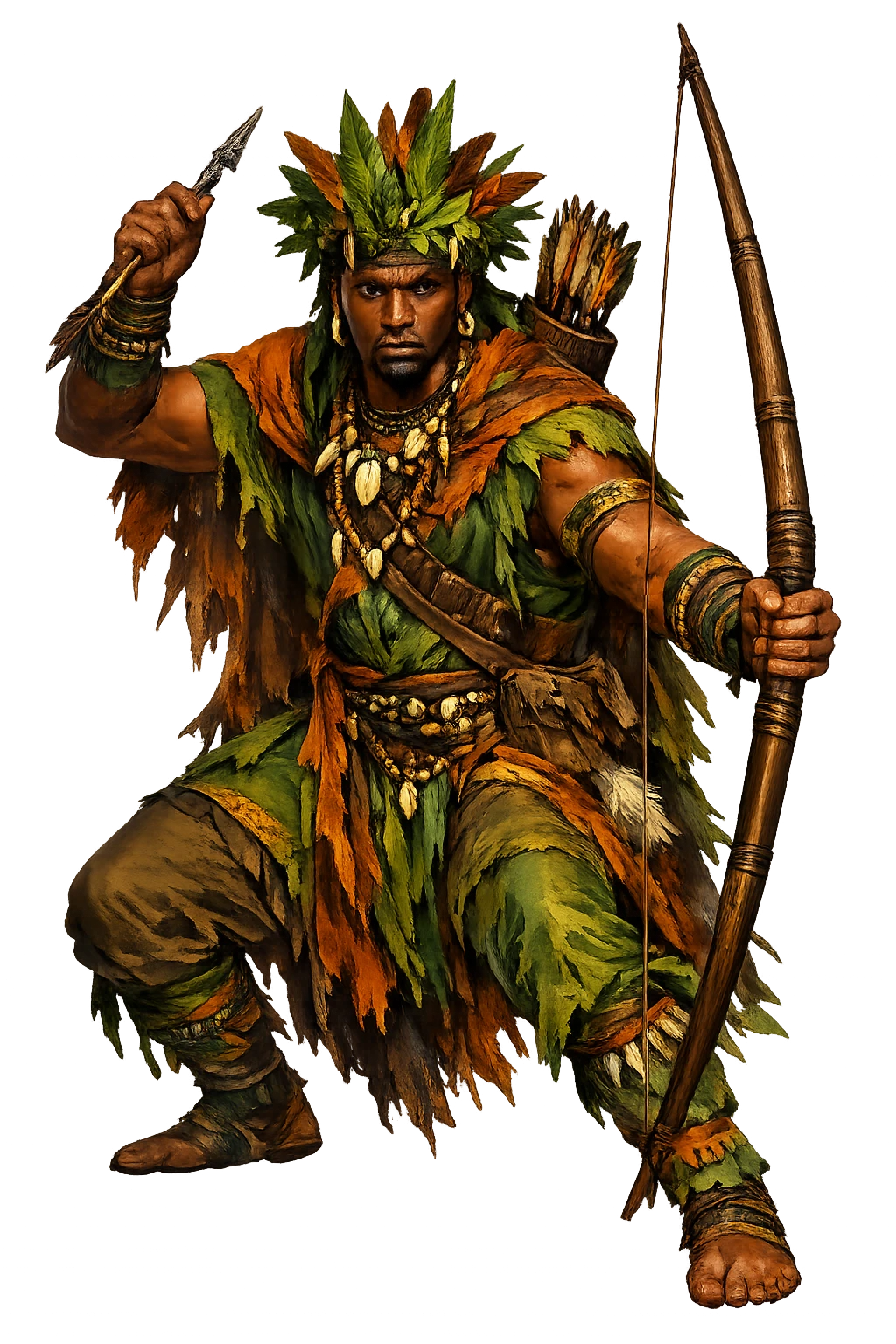
Ọṣọọsì (ochosi) — Hunting, Forest, Justice · The Single Arrow, Lord of the Forest Hunt — is the Yoruba orisha of the hunt: the divine tracker whose one arrow always suffices, lord of the forest and of all who must find what is hidden.
Where his brother Ògún clears the road with iron, Ọ̀ṣọ́ọ̀sì works by patience: he is the stillness of the hunter who waits, the discipline of the single shot, and — in the diaspora especially — the finder of the lost, patron of those who pursue justice and of those pursued by it. The Ifá corpus and the hunters' praise poetry know him as the orisha who never draws a second arrow.
The entry preserves a special case of restoration. The ASCII id ochosi is the Cuban Santería spelling, where Spanish ch writes the Yoruba sound /ʃ/; the Unicode restoration Ọṣọọsì renders the name in standard Yoruba letters — ṣ for ch, the open vowels ọ — while the fully tone-marked scholarly form is Ọ̀ṣọ́ọ̀sì. PuniCodex serves the temple at ọṣọọsì.com. The restoration preserves the distinctive underdotted vowels and the letter ṣ that ASCII cannot carry, placing the name in Tier 1.
The Name
The name is attested in Yoruba standard orthography as Ọ̀ṣọ́ọ̀sì, the orisha of hunters; Abraham's dictionary records it without a fully secure derivation, and scholars have left the etymology open rather than guess. The name's history in the Americas wrote it two ways: Cuban Spanish spelled the /ʃ/ as ch — Ochosi — while Brazil kept the ṣ sound in Oxóssi. The ASCII id ochosi is thus the Lukumí (Santería) spelling of a Yoruba theonym.
The Unicode restoration Ọṣọọsì re-reads the Cuban spelling through Yoruba orthography: o-ch-o-s-i becomes Ọ-ṣ-ọ-ọ-s-ì, recovering the underdotted open vowels /ɔ/, the postalveolar ṣ /ʃ/, and the final low tone. The fully tone-marked standard form Ọ̀ṣọ́ọ̀sì (variant, cited to Abraham) adds the complete tonal melody — low-high-high-low-low — that liturgical Yoruba sings. Because the restoration preserves distinctive letters and tone the ASCII form loses, the name is classified Tier 1.
The letter-by-letter transformation runs:
- o → Ọ — O with dot below: open /ɔ/
- c → ṣ — S with dot below: /ʃ/ (Santería ch = Yoruba ṣ)
- h → ọ — O with dot below: open /ɔ/
- o → ọ — O with dot below: open /ɔ/
- s → s — Same
- i → ì — Grave: low tone
The project holds the domain ọṣọọsì.com (xn--s-hga147tdmaba.com) as the canonical home of this name.
The Original Script
The name is preserved in the Yoruba standard orthography (Latin alphabet with diacritics, codified from the 1840s onward) as Ọ̀ṣọ́ọ̀sì — Yoruba (Niger-Congo), attested 19th c. CE – present; the oral tradition it records is far older, carried in Yorubaland and the diaspora by the memorised Ifá corpus and the hunters' chant repertory. The script is written left-to-right.
The scholarly rendering proceeds step by step:
- Yoruba orthography uses the underdot to distinguish the open vowels ẹ /ɛ/ and ọ /ɔ/ and the postalveolar ṣ /ʃ/ from their plain counterparts; tone is marked with acute (high), grave (low), and unmarked (mid).
- The Cuban spelling Ochosi records the same phonology in Spanish letters: ch for /ʃ/, plain vowels for the underdotted ones.
- The Unicode restoration Ọṣọọsì re-reads the Santería spelling in Yoruba letters; the fully tone-marked form Ọ̀ṣọ́ọ̀sì (variant, cited to Abraham) adds the complete tonal melody.
- The ASCII form loses vowel quality, the sibilant's identity, and tone at a single stroke.
Pronunciation
The reconstructed pronunciation of the name is /ɔ̀.ʃɔ́.ɔ̀.sì/ — Yoruba Reconstruction.
Phoneme by phoneme:
- Ọ̀- — Open-mid back rounded [ɔ] on a low tone, written with a dot below
- -ṣọ́- — Voiceless postalveolar fricative [ʃ] (the underdotted ṣ) with open [ɔ́] on a high tone: the name's crest
- -ọ̀- — The open vowel repeated, falling back to low
- -sì — Alveolar [s] and close [i] on a final low tone
For the modern speaker, the closest approximation is: ‘aw-shaw-AW-see’ — rise to the high middle syllable, then let the last two fall low.
Kindred and historical forms of the name:
- Standard Yoruba — Ọ̀ṣọ́ọ̀sì, the orisha of the hunt
- Cuban Lukumí — Ochosi, syncretised with Saint Norbert
- Brazilian Candomblé — Oxóssi, syncretised with São Sebastião (and, in Rio de Janeiro, with São Jorge)
- Owned form — Ọṣọọsì
Ọṣọọsì is Tier 1: the underdotted ọ marks the open vowel, ṣ the sibilant, and the grave ì the closing low tone — three distinctive features ASCII loses at once.
Mythology
Ọ̀ṣọ́ọ̀sì's myths are hunters' stories: tales of patience, aim, and the ethics of taking life from the forest. The Ifá corpus and the praise tradition keep his signature deed simple and absolute — he never needs a second arrow — and from that single fact the tradition spins his whole character: restraint, preparation, and respect for what is hunted.
The Provider
In the cycle of the orisha, Ọ̀ṣọ́ọ̀sì is the one who feeds: where Òrìṣà-ńlá shapes humanity and Ògún cuts the road, the hunter orisha brings game from the deep bush to the town. Yoruba liturgy honors providers because a community is built on what the forest yields, and the corpus remembers him as the orisha whose aim never wasted the forest's gift.
The Warriors
In the diaspora, especially in Cuban Regla de Ocha, he stands with Èṣù-Elegba and Ògún among the ‘Warriors’ (Guerreros) — the first orishas a devotee receives, the guardians of the road of life. The grouping is theological economy: Elegba opens the way, Ògún clears it, and Ochosi finds what lies along it.
The Tracker of Justice
Cuban patakís (sacred stories) developed the hunter into the tracker of the lost and the wrongly accused: Ochosi who finds what is hidden, who hunts truth as he hunts game. His association with courts and prisons in Lukumí practice grows directly from the arrow's logic — the pursuit that does not miss — turned from game to justice.
The Hunter Who Kills Once (Oríkì)
His praise-poems are the hunt distilled: the oríkì greet Ọ̀ṣọ́ọ̀sì as the hunter who kills with a single arrow — the archer whose patience is so complete that the forest gives him what it denies the noisy and the hasty. In the Candomblé houses of Brazil the same idea opens his festivals: Oxóssi, rei das matas, king of the forest, the provider whose one shot feeds the whole town. The oríkì tradition is not ornament here; it is the liturgy of competence.
The Orisha of the Odù (Ifá Corpus)
In the Ifá divination corpus — the 256 odù and their thousands of memorized verses — the divine hunter walks as provider and strategist: the orisha who knows the paths of the bush as the babaláwo knows the paths of the palm nuts. Bascom's fieldwork in Ife and among Cuban practitioners recorded his place in the diviners' world; Idowu's theology of the orisha sets him among the ministers Olódùmarè appointed over creation's wild half. Wherever Ifá is consulted, the forest has a spokesman.
Oxóssi of the Twentieth of January (Candomblé)
In Brazil, Oxóssi was paired with São Sebastião — the Roman soldier shot through with arrows for refusing to renounce his faith, his iconography a perfect mirror for the archer orisha — and the saint's feast of January 20 became Oxóssi's own. In Umbanda his name heads the whole linha de Oxóssi, the line of the caboclo spirits, the indigenous forest guides. Three nations, three spellings, one bow.
Symbols & Iconography
The iconography of Ọṣọọsì is the equipment of the perfect hunter, compressed into regalia:
- Bow and single arrow (ọfà) — His defining emblem: the one shot that suffices, carried in shrine and procession across three continents
- The forest itself — His shrine materials keep the bush present: leaves, horns, and the iron of the hunt
- Iron implements — Shared with his brother Ògún: the tools of those who work the wild — but his are the weapons of aim, not of the forge
- The ox-tail switch (eruexim) — The regalia carried by his devotees in Brazilian Candomblé, the hunter's fly-whisk become a badge of office
- The colour of the bush — Green regalia in Brazil, the forest worn as cloth
Archaeology & Evidence
Yoruba religion is a tradition of living shrines rather than excavated monuments, and Ọ̀ṣọ́ọ̀sì's material record is accordingly liturgical: shrine assemblages of iron hunting gear, horns, bows, and arrow-points kept in hunters' compounds and orisha houses, and the museum collections of Yoruba ritual art that preserve his regalia — bow, quiver, and the iron emblems of the hunt.
No excavation names him, and none could: his archive is oral — the Ifá corpus, the ijálá chants of the hunters' guilds, the oríkì recited at shrine and festival. The scholar of Ọ̀ṣọ́ọ̀sì works where the evidence actually lives: in the performance of diviners and hunters, recorded in the great ethnographies of the twentieth century rather than in strata.
Realm & Domain
Ọṣọọsì is the orisha of the hunt and of the forest that feeds it — and, by extension, of every disciplined pursuit: tracking, finding, providing, and the long patience that justice requires.
The Hunt
He owns the bow, the arrow, and the knowledge of the forest's ways; hunters and providers are his first people.
The Single Arrow
His emblem is economy of effort: one arrow, loosed once, that finds its mark — the orisha of sufficiency against waste.
The Forest
The igbo, the deep bush beyond the farms, is his house; he is lord of its game and its silences.
Justice and the Found
In the diaspora he became the finder of the lost — patron of those who track the truth, and (in Cuban tradition) the one invoked by the accused and by those who pursue them alike.
The Bow (Ofá)
His emblem across three continents — the hunter's bow, carved on his shrines and sung in his names.
The Forest (Igbó)
His cathedral and his larder: the deep bush where game, medicine, and danger all live.
Across Cultures
The transatlantic tradition split his spelling but kept his arrow. In Cuba he is Ochosi, identified with Saint Norbert — a pairing fixed in Lukumí practice and celebrated on the saint's June feast — while his theological role expanded into the patron of the pursued and the pursuer, of courts, tracking, and justice. In Brazil he is Oxóssi, one of the most beloved orixás of the Candomblé nations: in Bahia identified with São Sebastião, the arrow-pierced soldier-saint whose January feast became Oxóssi's own, and in Rio de Janeiro often with São Jorge.
Kindred figures in the PuniCodex cross-tradition index include Ògún (iron, the road, the other arm of the hunt), Ọ̀rúnmìlà (the Ifá corpus that carries his stories), and Ọya (the windswept wild at the forest's edge).
Cultural Legacy
Oxóssi is among the most visible orixás of Brazilian public religion: the January feast of São Sebastião in Bahia draws his devotees in green, and Candomblé terreiros from Salvador to São Paulo keep his bow on the wall. In Cuba and the United States, Ochosi's presence in the Guerreros makes him part of nearly every initiated household in the Lukumí tradition — the orisha you receive at the beginning, the one who teaches aim before power.
His modern meaning is the ethic his arrow encodes: do not waste. In an age of abundance and scatter, the single arrow reads as a discipline — of attention, of resources, of speech. Hunters' ethics, providence, and the dignity of sufficiency keep his cult contemporary on three continents.
The Scholarly Record
The account of Ọṣọọsì given in this edition rests on the witnesses and reference works listed below. The dictionary secures the name; the Ifá scholarship and the hunters' poetry carry the theology; the diaspora ethnographies record the transatlantic lives.
- Abraham, R. C., Dictionary of Modern Yoruba (London: University of London Press, 1958), s.v. Ọ̀ṣọ́ọ̀sì.
- Abimbola, Wande, Ifá: An Exposition of Ifá Literary Corpus (Ibadan: Oxford University Press Nigeria, 1976).
- Bascom, William, Ifa Divination: Communication Between Gods and Men in West Africa (Bloomington: Indiana University Press, 1969).
- Idowu, E. Bolaji, Olódùmarè: God in Yoruba Belief (London: Longmans, 1962).
- Babalola, S. A., The Content and Form of Yoruba Ijala (Oxford: Clarendon Press, 1966).
- Murphy, Joseph M., Santería: African Spirits in America (Boston: Beacon Press, 1988), on Ochosi and the Guerreros.
- Bastide, Roger, The African Religions of Brazil, trans. Helen Sebba (Baltimore: Johns Hopkins University Press, 1978), on Oxóssi.
- Verger, Pierre, Orixás (São Paulo: Editora Corrupio, 1981).
- Mason, John, Four New World Yoruba Rituals (Brooklyn: Yoruba Theological Archministry, 1985).
- Drewal, Margaret Thompson, Yoruba Ritual: Performers, Play, Agency (Bloomington: Indiana University Press, 1992).
A Meditation
Ọ̀ṣọ́ọ̀sì teaches the mathematics of enough. Every other hunter in the world carries a quiver of maybes; he carries one arrow, because he has done the harder work already — the watching, the waiting, the knowing of the forest. The arrow is the last inch of a discipline that began at dawn.
That is why his cult survived the Middle Passage and flourished in courts and cities far from any forest: the single arrow is not really about hunting. It is about what any life looks like when preparation replaces panic — about loosing once, and meaning it. The tradition asks the question his emblem poses: what is your one arrow, and what are you doing today to deserve it?
The Unicode Restoration
Ọṣọọsì is classified as Tier 1: the restoration preserves at least one distinctive feature — a diacritic or a distinctive letter — that the ASCII form loses. The ASCII fallback ochosi still resolves everywhere, but it is the restored form that carries the name's full information. Across the 6 characters of the name, the restoration adjusts 5: 1 mark of stress (ì); 4 further adjustments (Ọ, ṣ, ọ, ọ). That is the whole thesis of this temple: the marks are the message.
The Domain Name
The restored name is live as a working domain: ọṣọọsì.com, which the DNS carries in punycode form as xn--s-hga147tdmaba.com — an ASCII-compatible encoding that lets a non-ASCII name travel the global network without breaking older infrastructure. The visitor sees Ọṣọọsì; the machines see the encoding. That duality is the engineering compromise on which the entire restoration rests, and it is why a name written the way its own tradition wrote it in Yoruba (modern Latin orthography) can now be typed into any browser on earth.
Why This Restoration Matters
Every stage of the journey from Yoruba (modern Latin orthography) to Unicode was an act of care: the scribe who first wrote the name, the lexicographer who glossed it, the engineer who taught the DNS to carry it. The PuniCodex restoration is the latest stage, not the last word — the Scholarly Edition is revised as the evidence improves. What does not change is the principle: a name deserves to be written the way its own tradition wrote it. Ọṣọọsì in the address bar is that principle, made routable.
Explore Further
This post is one doorway into the temple. The home page carries the full character breakdown and the ambient canvas; the lore page tells the myths in long form; the Scholarly Edition preserves the sources, pronunciation data, and revision history; and the patron wall supports the restoration directly. For the wider map, browse the Lexicon, explore the Pantheon, or return to the PuniCodex blog.
Related Names
Sources
The full scholarly apparatus — every citation, revision, and review — lives in the Scholarly Edition. Key references for this post:
- Abraham, R. C., Dictionary of Modern Yoruba (London: University of London Press, 1958), s.v. Ọ̀ṣọ́ọ̀sì.
- Abimbola, Wande, Ifá: An Exposition of Ifá Literary Corpus (Ibadan: Oxford University Press Nigeria, 1976).
- Bascom, William, Ifa Divination: Communication Between Gods and Men in West Africa (Bloomington: Indiana University Press, 1969).
- Bastide, Roger, The African Religions of Brazil, trans. Helen Sebba (Baltimore: Johns Hopkins University Press, 1978), on Oxóssi.
- Lexicon authorities for this entry: Abraham, Bascom, Idowu.